Finding the best holster for Sig P226 owners starts with how you actually carry a full-size pistol. An IWB rig has to conceal its weight comfortably; a range holster needs a secure fit and an easy draw; a duty holster calls for a different kind of retention.
Then there’s the gun itself. The MK25’s rail, a Legion SAO’s controls, or a TACOPS with taller sights or a threaded barrel can change which holster fits. “Fits P226” on a product page isn’t quite enough. These seven options cover concealed, open and duty carry, with the fit checks worth making before you buy.
The Best Sig P226 Holsters at a Glance
A P226 holster has to suit both the pistol and the job you’re asking it to do. Here’s the quick comparison.
HOLSTER | BEST FOR | CARRY AND RETENTION |
|---|---|---|
MK25 concealed carry | IWB; adjustable passive retention | |
Range and general OWB use | OWB; adjustable passive retention | |
Standard railed P226 concealed carry | IWB; adjustable passive retention | |
Open carry with a finger-release lock | OWB paddle; active lock | |
Another straightforward IWB option | IWB; adjustable passive retention | |
Leather OWB carry | OWB; open-top passive retention | |
Properly configured duty carry | Mid-ride OWB; Level III retention |
P226 variants that affect holster fit
The P226 name covers several configurations. These are the three discussed here, and the details that matter when choosing a holster.
MK25
We will start off with the MK25 as it has the least variation in it. It, like the others mentioned, is a full sized handgun. This model is offered only in 9mm and is a Double Action/Single Action (DA/SA) external hammer gun.
It has a decocking lever rather than a manual thumb safety. With the hammer down, the first trigger pull is double action; after the slide cycles, subsequent shots are single action. The difference is that the trigger pull weight will be different between firing in DA and SA. This can be overcome with practice and can help with dry fire training.
This model also features an M1913 rail for lights and other accessories, along with SIGLITE night sights.
Legion
The P226 Legion is more than a grey finish and G10 grips. The classic full-size model adds an undercut trigger guard, front slide serrations and upgraded sights. The DA/SA version also has a Short Reset Trigger and low-profile decocker and slide catch. It is still a full-size P226, though, so the Legion badge alone won’t tell you whether a holster fits.
The distinction to watch is DA/SA versus single-action-only (SAO). The DA/SA Legion uses a decocker; the SAO has a manual thumb safety, more like a 1911. A holster’s shell or sweat guard needs to clear the controls on the version you own. Check the fit description for your exact pistol rather than assuming every holster marked “P226” accommodates both versions.
Then check what you have attached to it. A red dot needs suitable optic clearance, and a weapon light needs a holster made for that specific pistol-and-light combination. Taller sights or a threaded barrel can matter too. Also, don’t assume a holster for the classic full-size Legion fits the newer P226-X Legion or the shorter P226-XCarry Legion; confirm the model with the holster maker before ordering.
TACOPS
The next option is the TACOPS model. This Tactical Operations version keeps the DA/SA action and short reset trigger, while adding an Elite beavertail frame and magwell-style grips. SIG listed SIGLITE night sights on its catalogued 9mm TACOPS, along with a 20-round magazine where permitted. Different TACOPS packages have been sold over the years, though, so the sights, magazine capacity and number of magazines should be checked against the particular pistol rather than assumed from the name alone.
A threaded-barrel version was also available, and some configurations had taller sights. That is where holster fit gets interesting: the holster needs to clear the actual sights and muzzle, as well as the rail and any light you have mounted. SIG has listed .40 S&W TACOPS models too, although its later catalog focused on 9mm. If you are buying for an older TACOPS, check the exact configuration before ordering. A holster marked simply “P226” may be close, but close is not the same as a proper fit.
Sig P226 Holster Considerations
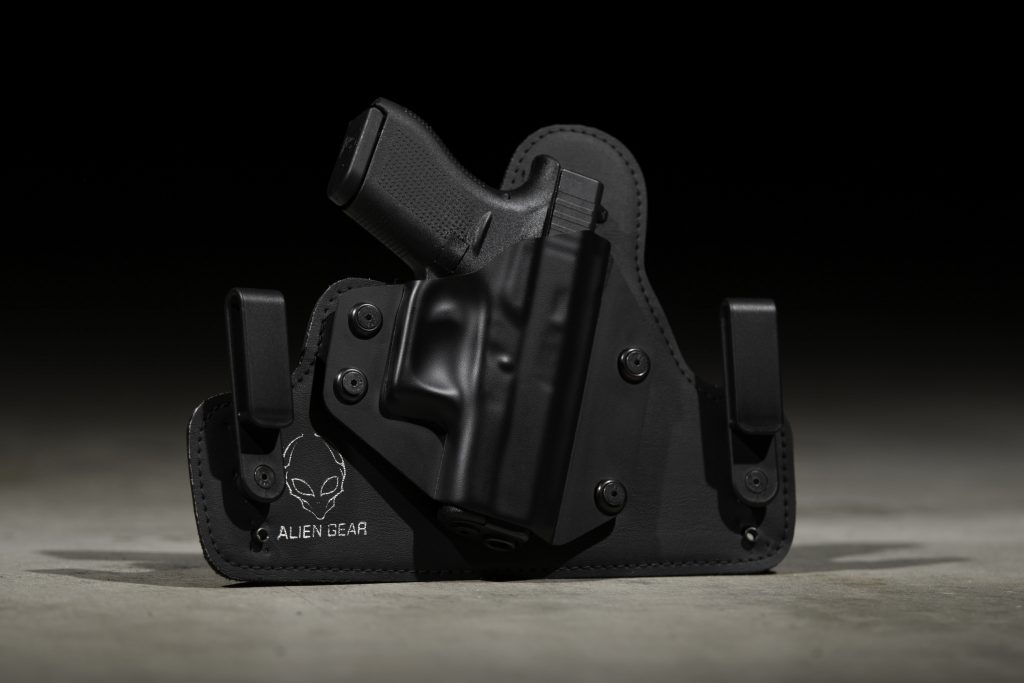
Let's now look into holsters. For a SIG P226 MK 25 concealed carry holster there are a number of factors to consider. Depending on how comfortable you are with the weapon you will have to consider if you want the holster inside or outside the waistband.
Given the size and the metal construction of P226s people tend to favor paddle holsters that are outside the waistband (OWB) because of the stability they offer.
A paddle can be convenient for range use, but it and the belt still have to support the weight of a full-size P226 without shifting or sagging. IWB carry is possible too, provided the holster and gun belt are up to the job. Either way, the trigger guard should be completely covered, the pistol should stay seated, and the holster should keep its shape when the gun is out. A bargain-bin universal sleeve that lets the pistol move around is no bargain.
The controls depend on which P226 you own. The MK25 and other DA/SA versions use a decocker rather than a manual thumb safety; the Legion SAO has a manual safety. Neither arrangement excuses a poor holster fit. Check that the holster does not press on a control, catch the hammer or prevent the pistol from seating fully. Secure retention and a consistent fit matter more than a listing’s claim that it fits “all P226 models.”
Another thing to consider is that the Mk25, TACOPS, and Legion are all railed pistols.
Do not assume every railed P226 fits the same shell. The MK25’s rail can differ from a standard P226’s, and a light-bearing holster must be made for the particular pistol and light combination. A threaded TACOPS barrel, taller sights, an optic or the Legion SAO’s controls can also affect clearance. Check the maker’s fit list for your exact pistol, accessories and draw hand before ordering; “P226” on its own is not enough information.
The 7 Best Holsters for Sig P226 Reviewed
Let's take a closer look at some of the best holster offerings for the P226.
1. Vedder LightTuck for the P226 MK25 — Best MK25 IWB Holster
The MK25’s rail is exactly why a generic P226 IWB holster can be a frustrating gamble. Vedder makes a LightTuck specifically listed for the P226 MK25 Navy, so this is a more sensible starting point than buying a vaguely labelled shell and hoping it clicks into place. Its slim Kydex body keeps extra bulk down, while adjustable retention, ride height and cant give you room to find a position that works with a full-size pistol.
There is still no pretending a P226 disappears like a pocket gun. The grip and weight make a sturdy belt important, and a hard Kydex shell may feel less forgiving against the body than a leather-backed hybrid. Vedder offers an optional claw and an optic choice, but check those selections - and any light or other modification - against the actual pistol before ordering. For a standard MK25 without a mounted light, the model-specific fit is the real selling point.
Pros
- Specific P226 MK25 Navy option
- Adjustable retention, ride height and cant
- Slim shell with optional concealment accessories
Cons
- Full-size pistol still needs a supportive belt and suitable clothing
- Bare Kydex may be less comfortable against the skin
- Do not assume the standard configuration accepts a mounted light
2. Blade-Tech Signature OWB — Best for Range Use

The Signature is the one I’d look at for a regular full-size P226 when the job is range practice or an OWB setup. Choose Blade-Tech’s P220/P226 4.4-inch fit, rather than assuming any Signature shell will do. Its rigid polymer body, adjustable retention and Tek-Lok belt attachment make it easy to set up without turning the holster into a project. The optic-friendly cut is useful if your particular pistol and sight clear the shell.
This is an open-top holster with passive retention. There’s a positive feel when the trigger guard seats, but no hood or separate release to operate. That makes sense for range use; it isn’t a stand-in for a Level III duty rig. Blade-Tech lists this model as right-hand only. I also wouldn’t buy it for an MK25, Legion SAO or light-bearing P226 on the strength of “P226” in the name alone—confirm that configuration with Blade-Tech first.
Pros
- Adjustable retention and a secure Tek-Lok belt attachment
- Rigid shell and optic-friendly opening
- A useful choice for a standard 4.4-inch P226 at the rang
Cons
- Right-hand model
- No active retention device
- Special rails, controls and mounted lights need separate fit confirmation
3. Rounded IWB for P226 with Rail — Best Everyday IWB Option

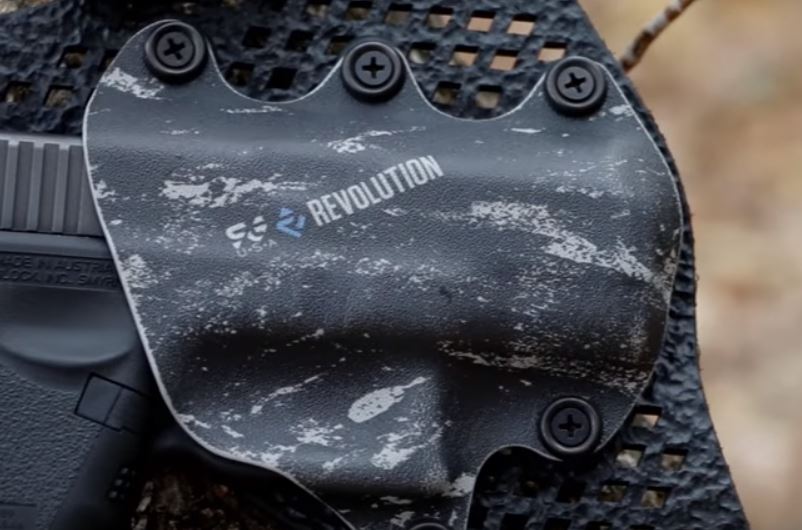
If you want to carry a railed P226 inside the waistband, this Rounded shell gives you a purpose-made alternative to a loose "one size fits several pistols" holster. Retention and cant are adjustable, the trigger guard is enclosed, and the clip keeps the setup fairly simple. Those adjustments matter with a heavy, full-size SIG: a position that feels fine for five minutes may be annoying by lunchtime.
The key words are "P226 with rail." Rounded lists that fit, but its standard holster does not accommodate a mounted weapon light. An MK25 has a different rail profile, and a Legion SAO adds controls that also deserve a fit check. Don’t treat this Amazon variant as a promise that every P226 configuration clicks into place. As with any IWB option here, pair it with a belt that can actually support the pistol.
Pros
- Made for a railed P226 rather than a generic handgun size
- Adjustable retention and cant
- Enclosed trigger guard
Cons
- A full-size P226 still takes work to conceal comfortably
- Standard version is not for a mounted light
- MK25 and Legion SAO fit should be confirmed separately
4. CYTAC P226/P220 Full-Size OWB — Best Paddle Option with an Active Lock
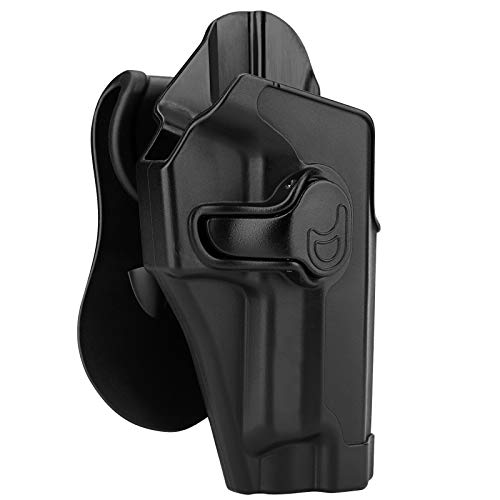
The CYTAC is for someone who wants more than the friction fit of an open-top range holster without moving straight to a bulky duty rig. Its polymer paddle can be set at different angles, and the pistol locks into the holster until you use the finger release. That gives it a different feel from the Blade-Tech above, where retention is adjusted with screws but there is no separate release.
Choose the listing for the full-size 4.4-inch P226, and pay attention to the right-hand orientation. CYTAC also excludes the shorter P229 from this shell. The product is marketed as Level II, but I would not describe it as a substitute for the Safariland duty holster below. Practise the release with an unloaded pistol, and check clearance around your particular rail, controls and sights. A mounted light needs its own confirmed holster fit.
Pros
- Active lock rather than friction retention alone
- Adjustable paddle angle
- Listing specifically names the full-size P226
Cons
- Right-hand, paddle-carry configuration
- Finger release takes practice
- Do not assume duty suitability or accessory compatibility from the listing
5. PoLe.Craft IWB for P226 4.4-inch — Best Simple Kydex Alternative

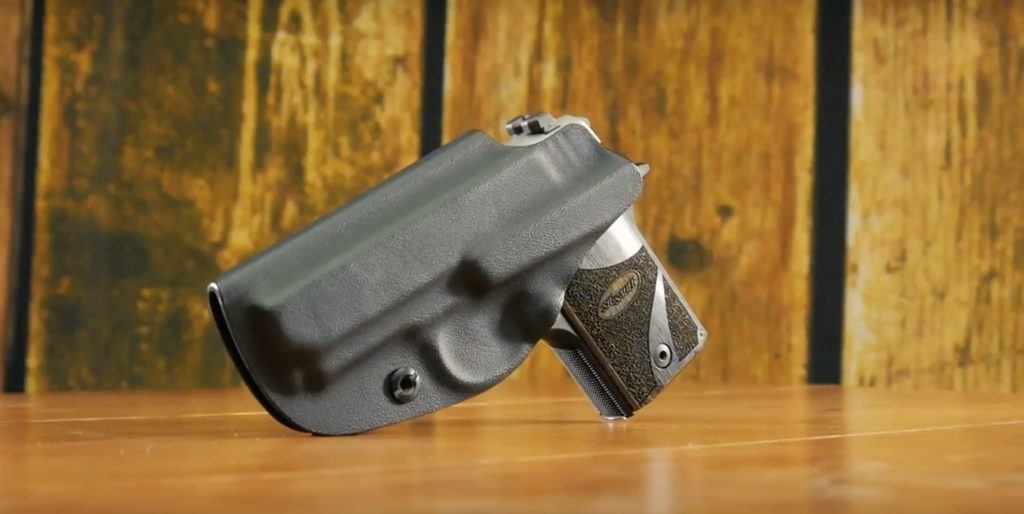
There’s no magic involved with this one: it’s a molded Kydex IWB holster for a full-size, 4.4-inch P226, with adjustments for the hold on the pistol and its carry angle. If you want a fairly plain inside-the-waistband setup, that simplicity may be the attraction. The shell keeps its shape when the pistol is out, and the clip avoids the extra bulk of a larger hybrid backer.
The trade-off is the same one you meet with most compact Kydex rigs: a full-size P226 still has a sizeable grip and plenty of weight above your belt. Getting the angle and belt right matters more than the product photos suggest. This is a passive-retention option, not a locking duty holster. Check the exact version of your P226 before ordering, especially for an MK25 rail, Legion SAO controls, optic or attached light.
Pros
- Molded for the full-size 4.4-inch P226
- Adjustable retention and cant
- Slim, uncomplicated IWB layout
Cons
- No active retention device
- Full-size grip can print beneath light clothing
- Modified P226 variants need a specific fit check
6. 1791 Gunleather Optic-Ready BH2.4 — Best Leather OWB Option
If a hard polymer shell isn’t your thing, the optic-ready BH2.4 brings a traditional leather belt holster into the mix. The important detail is the size: choose 2.4. That is the size in 1791’s current fit guide that names the P226 and P226R. Its open top leaves the grip accessible, while the optic-ready cut makes it worth considering for a suitable red-dot-equipped pistol.
Leather is a different proposition from the adjustable Kydex holsters above. Expect it to feel firmer at first and to settle with use; there is no retention screw to fine-tune the fit. Its multi-fit design also makes checking your exact pistol more important, particularly if you have an MK25 rail, an SAO safety or a mounted light. For a conventional P226 carried OWB, though, it offers a choice that doesn’t feel like another variation of the same plastic shell.
Pros
- Size 2.4 fit guide explicitly includes P226 and P226R
- Leather construction and optic-ready opening
- Straightforward belt carry
Cons
- No adjustable retention screw or active lock
- Leather may need break-in
- Multi-fit listing does not settle every variant or accessory question
7. Safariland 6360 ALS/SLS — Best Duty Holster
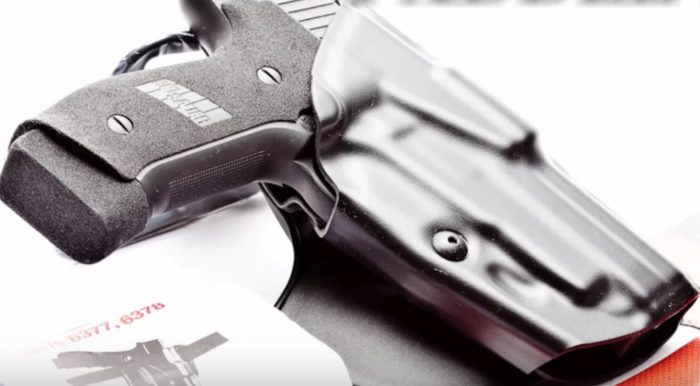
For actual duty carry, the 6360 is a different animal from the open-top holsters in this list. It combines Safariland’s ALS lock with an SLS rotating hood in a mid-ride setup. That gives you Level III retention, but it also means learning the release sequence until it is second nature. It is bigger and more involved than you need for a casual range session.
The model number alone is not enough to order the right one. Safariland sells the 6360 in different firearm, light and other configurations, and its product images are only representative. Select your precise P226 variant and accessories in its fit system before buying. In particular, do not assume that a standard shell accepts a mounted light or optic. This is the duty choice here because of its retention system, provided you can configure and confirm the fit for the pistol you actually own.
Pros
- ALS lock plus SLS rotating hood
- Mid-ride, Level III duty design
- Configurable for specific firearm setups
Cons
- More bulk and release steps than the range or concealment options
- Correct firearm and accessory selection is essential
Bottom Line
The P226 style pistol is a decent design for a carry pistol. It will require more training to get the hang of, since DA/SA guns are considered more of an advanced shooter's pistol. This combined with any holster system makes training even more important with a P226.
A threaded-barrel TACOPS can still be a good choice; just make sure the holster clears its actual muzzle, sights and any light rather than assuming a standard P226 shell will fit. If you are restricted in what you can carry magazine wise, Sig offers 10 round and 15 round magazine options.
As a 9mm option P226s are right up in the market next to Glocks and Smith & Wesson Shields. They have been issued as duty guns to a number of agencies but the support available for Glocks as well as the after market options put the Glock ahead in regards to support. Which is something to consider when getting into carrying a handgun. The metal slide and alloy frame of the P226 also makes it a very heavy pistol, which some may find uncomfortable in addition to it being a full sized model. If you got a railed model it also allows for you to add a weapon mounted light to aid you in identifying potential targets and avoid making a costly mistake in a violent encounter.
For the most part there are worse option to carry than the P226 in any of its forms, whether MK25, Legion or TACOPS. Considerations for carry one include aftermarket options, sights, spare magazines, holsters, add-ons, and spare parts. Above all you should also plan to and find opportunities to train and practice with the P226 in what ever configuration you choose. The TACOPS seems to be the best option from a capacity stand point if your location allows for the carry and use of magazines in excess of 15 round magazines.
Hopefully this article has given you an idea for the best holster for Sig P226 in the context of your carry options.